Kitchen printer or kitchen display screen?
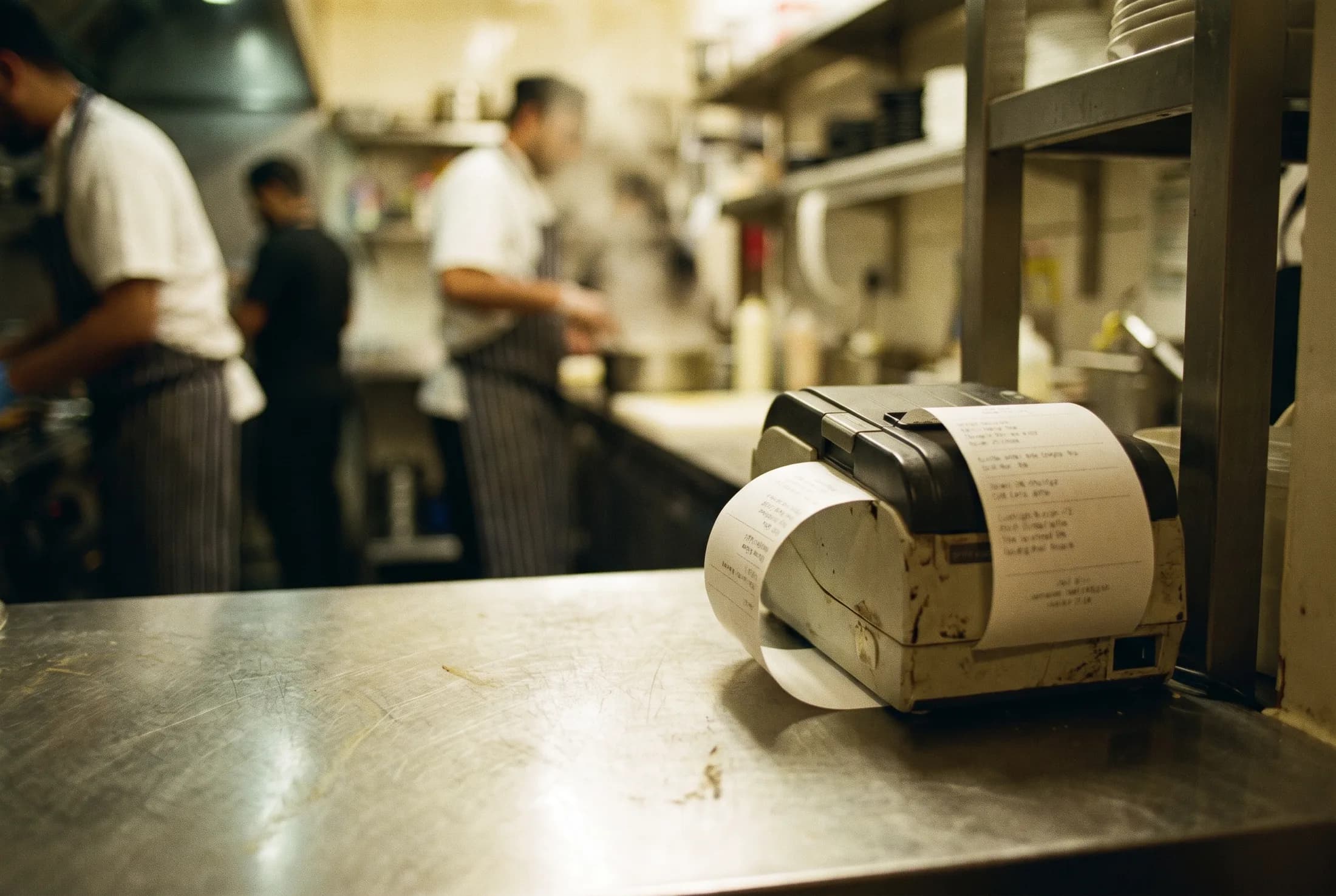
Every kitchen we have wired up has an opinion about this, and the opinion is usually formed by whichever one failed on them last. Both are fine. They fail differently, and that is the whole decision.
A ticket printer puts a piece of paper on the pass. A kitchen display screen puts the order on a monitor with a timer on it. What matters is what happens on the worst night of the year, not the best.
What a printer is better at
Paper survives wet hands, flour, steam and somebody standing in front of the screen. It can be stuck to a shelf in the order the chef wants to cook them, not the order they arrived. It needs no training whatsoever. And when the internet goes down, a printer on the local network is still printing, which is not true of anything browser-based unless it was built to be.
It also leaves a physical trail. When a customer rings to say the order was wrong, there is a ticket to look at.
What a screen is better at
Timers. A screen knows how long each order has been waiting and can colour the late ones, which paper cannot do. It can split one order across stations, so the fryer sees fryer items and the grill sees grill items, with the whole order bumped when both are ready. It does not run out of paper at half nine.
And it is honest about volume. Thirty tickets on a rail look the same as fifteen; thirty orders on a screen do not.
The real answer, in most kitchens
Both. Print for the pass, screen for the stations, or screen as the live queue with a printed ticket as the receipt that travels with the bag. The two are not rivals; the failure modes are complementary, which is exactly why you want both.
What you must not do is run them off two different systems. If the printer is fed by the till and the screen is fed by the website, the kitchen is reconciling by eye on a Friday night, and that is the night it goes wrong.
The things that actually break
- Paper. Buy more rolls than you think and keep one by the machine, not in the back.
- Wifi. Run the printer on a cable if you possibly can. A kitchen is a hostile place for a radio signal, and a dropped ticket is a lost order.
- Cloud printers with no fallback. If a ticket can only arrive over the internet, decide now what happens when the line drops: an on-screen queue, a phone alert, something. Hope is not a fallback.
- Nobody hearing it. An audible alert that can be heard over an extractor fan is worth more than any feature on either device.
We wire both sides as part of a till and kitchen setup, fed by one system whether the order came from the counter, a kiosk, the website or a delivery app, so there is one queue and one end-of-day report. The ordering side of it is on the ordering platforms page.