Scheduled orders: the money in the next twenty hours
Most takeaway systems are built for the next twenty minutes. The money that gets left on the counter is in the next twenty hours: the office lunch for Thursday, the family order for seven on Saturday, the twelve o’clock collection somebody wants to arrange on their way to work.
Scheduled ordering is the least glamorous feature in the category and one of the most profitable, because it moves demand off your worst hour and onto your quietest one.
What it does to a kitchen
An order placed at nine in the morning for one o’clock is not a rush order. It is a known quantity you can prep against, and knowing at eleven that there are fourteen covers at one is the difference between a calm service and a scramble.
It also flattens the Friday peak. A system that lets somebody book eight o’clock at four in the afternoon converts a customer who would otherwise have given up on a forty-minute wait.
The four things it has to get right
- Opening hours it actually respects. If the system will take an order for a time you are closed, somebody is ringing a customer back to apologise, and that costs more than the order was worth.
- A capacity limit per slot. Unlimited pre-orders for one o’clock is not a feature, it is a trap. Slots have to cap, and the cap has to be yours to change on a quiet week.
- Lead time per item. Some things cannot be made in ten minutes. If the system does not know that, the promise is broken at the point of sale.
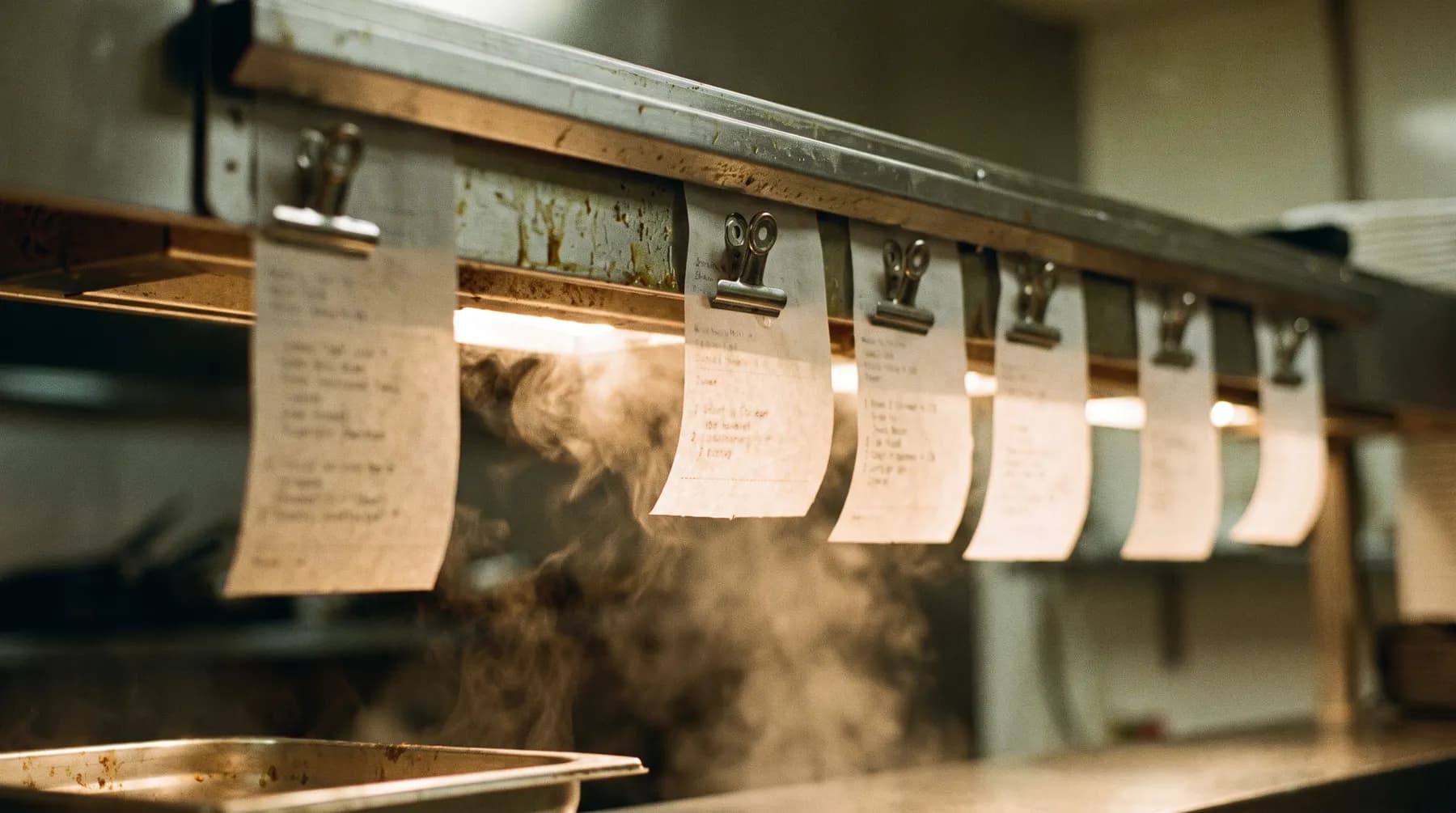
- A ticket that arrives when it is needed, not when it is placed. An order for one o’clock printing at nine is a piece of paper that will be lost by eleven. It should land in the kitchen on the prep clock, with the earlier copy visible on screen if anybody wants to look ahead.
Where it earns most
Office lunches, which are almost entirely pre-booked and almost never won by the business with the best food, but by the one that made ordering at half nine for one o’clock possible. Then Christmas, Mother’s Day and any fixed-menu night, where taking the order in advance is the only way to cook it properly.
What it is not
It is not a booking system. A table at eight and a lasagne at eight are different problems: one allocates a seat for an hour and the other allocates kitchen capacity for ten minutes. Businesses that do both need both, joined, rather than one pretending to be the other.
Scheduled ordering sits inside the ordering platform, and the table side of it is on booking systems. If you want to see what the apps are taking from the orders you already have, the commission calculator will show you.